
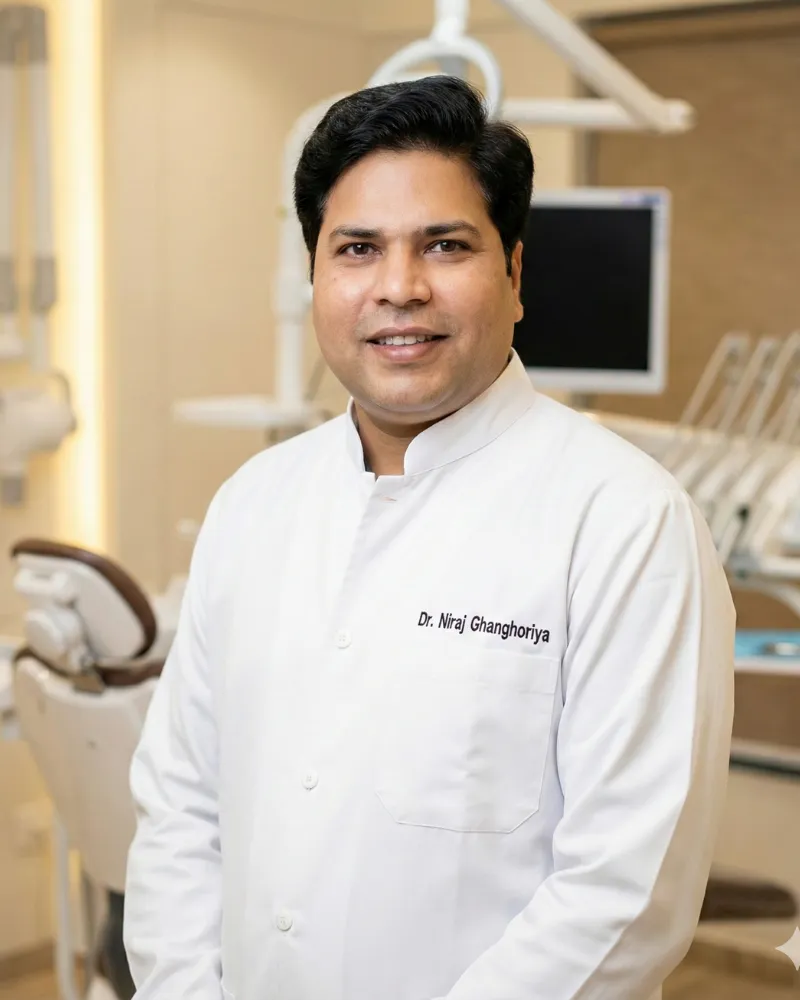
Clinical overview of implant complications in modern restorative dentistry.
title: "Dental Implant Complications: Risks and Solutions" author: "Dr. Niraj Ghanghoriya" date: "April 16, 2026" heroImage: "/images/implant-complications.png"
Dental Implant Complications: Understanding Risks and Clinical Solutions
While dental implants have a clinical success rate of over 95%, it is important to remember that they are medical devices placed in living tissue. Like any surgical procedure, complications can occur. At ToothCareUSA, we believe in radical transparency. By understanding the potential risks, we can work together to prevent them through precise planning and diligent aftercare.
Here is the clinical breakdown of common and rare implant complications.
1. Minor Complications: "Technical Issues"
These are typically easy to fix and do not mean the implant has failed.
- Screw Loosening: Over time, the tiny screw that holds the crown to the implant can loosen due to heavy biting forces. We simply re-tighten it using a specialized torque wrench.
- Crown Fracture: If you bite into something extremely hard, the porcelain crown may chip. We can usually replace the crown without touching the underlying implant.
- Soft Tissue Inflammation: Minor gum irritation (peri-implant mucositis) can occur if plaque accumulates. This is reversible with a professional cleaning and improved home care.
2. Major Complications: "Biological Risks"
These are more serious and require immediate clinical intervention.
- Peri-implantitis: An infection that causes bone loss around the implant. If caught early, we can treat it with laser decontamination (LAPIP). If caught late, the implant may need to be removed.
- Failure to Osseointegrate: In less than 2% of cases, the bone fails to "bond" with the titanium screw. This is often due to poor blood supply, smoking, or uncontrolled diabetes.
- Nerve Injury: Extremely rare in the digital age. This occurs if an implant is placed too close to the mandibular nerve, causing numbness. We prevent this using 3D CBCT imaging to map the nerve's exact path before surgery.
3. The "Silent" Risk: Occlusal Overload
If your bite is not perfectly balanced, the implant can experience "Too Much Force." Unlike natural teeth, implants do not have a periodontal ligament (a "shock absorber").
- Symptoms: You may feel a "clicking" sound or notice the crown feels slightly loose.
- The Solution: We perform a "Bite Adjustment" (Occlusal Equilibrating) to redistribute the pressure across your natural teeth.
"A complication is not a failure until you stop treating it. With 3D mapping and laser technology, we can solve almost any issue that arises, provided it's caught early during your annual health audits." — Dr. Niraj Ghanghoriya
4. How to Minimize Your Risk
- Stop Smoking: Smoking is the #1 cause of biological implant failure.
- Maintain Hygiene: Treat your implant like a high-performance engine—it needs regular maintenance.
- Choose a Specialist: Surgical precision is the best defense against complications.
Advice for Patients:
If you notice any "movement" in your implant or bleeding when you brush, do not wait. Contact our clinical team immediately for a health audit.
Authored by Dr. Niraj Ghanghoriya, Lead Clinical Director at ToothCareUSA. Source: Journal of Oral Rehabilitation — Risk Factor Management.