
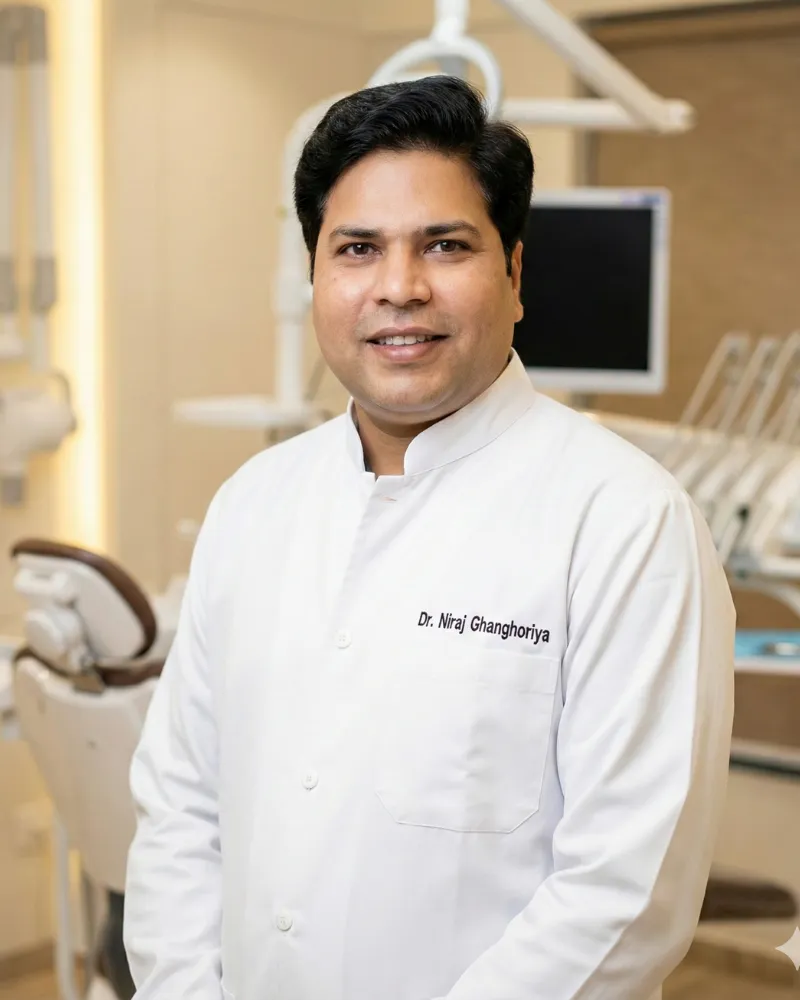
Clinical overview of implant recovery in modern restorative dentistry.
title: "Dental Implant Recovery: Timeline and Tips" author: "Dr. Niraj Ghanghoriya" date: "April 16, 2026" heroImage: "/images/implant-recovery-timeline.png"
Dental Implant Recovery: Clinical Timeline and Essential Care
The success of your dental implant is a partnership between the surgeon's precision and your body's ability to heal. While the actual surgery is often painless, the first 72 hours are critical for stabilizing the "Biological Seal" and preventing infection. At ToothCareUSA, we move beyond the standard "soft food" advice and provide an evidence-based roadmap for your recovery.
Here is the clinical timeline for a successful dental implant recovery.
1. The Critical First 48 Hours: Stabilization
Immediately after surgery, your body begins the inflammatory response—this is a normal part of healing!
- Control Bleeding: Bite on the provided sterile gauze for at least 30-45 minutes.
- Ice Therapy: Use external ice packs (20 minutes on, 20 minutes off) to minimize swelling in the jaw.
- Pain Management: We recommend taking your first dose of pain medication before the local anesthesia wears off to stay ahead of the discomfort curve.
2. Days 3 to 7: Soft Tissue Healing
During this phase, the gum tissue is beginning to close over the implant site.
- The Diet: Avoid crunchy, sharp, or hot foods. Stick to "lukewarm" liquids, smoothies, mashed potatoes, and scrambled eggs.
- Oral Hygiene: Do not brush directly on the surgical site. Use a gentle salt-water rinse (half a teaspoon of salt in warm water) twice a day to keep the area clean.
- No Straws: The suction from a straw can dislodge the blood clot, leading to a painful condition called "Dry Socket."
3. Weeks 2 to 12: Osseointegration (The Real Work)
This is the "Silent Phase." Beneath the surface, your bone is growing into the titanium screw.
- The Grip: The implant becomes more stable as the bone locks into its microscopic pores.
- Activity: You can return to normal exercise after 5-7 days, provided you aren't feeling throbbing in the surgical site.
- Smoking: This is the most dangerous time for smokers. Nicotine constricts the blood vessels in the bone, significantly increasing the risk of implant failure.
"Recovery is about 'Micromovement Protection.' If we can keep the implant perfectly still for the first 12 weeks, the bone will grow into it with 98% certainty. Your job is to avoid 'testing' the implant with your tongue or fingers." — Dr. Niraj Ghanghoriya
4. The 3-Month Checkup: Clinical Verification
At 10 to 12 weeks, we "test" the implant for stability. If it has reached the required ISQ (Implant Stability Quotient) value, we begin the process of making your final crown.
Advice for Patients:
If you experience heavy bleeding that doesn't stop or a fever higher than 101°F, contact our clinical team immediately. Every recover is unique, but safety is universal.
Authored by Dr. Niraj Ghanghoriya, Lead Clinical Director at ToothCareUSA. Source: Journal of Oral Implantology — Post-Operative Management Protocols.