MEDICAL DISCLAIMER: This guide is for educational purposes only and does not substitute for professional medical advice. Always consult with a qualified dental specialist.
The Complete Guide to
Molar Implants
Losing a back tooth drastically alters the **biomechanics of your mouth**. Molars are the engine of your bite, withstanding up to 200 lbs of pressure.
"Today, molar implants are the undisputed gold standard for restoring total, permanent function to the back of your mouth." — Dr. Niraj Ghanghoriya
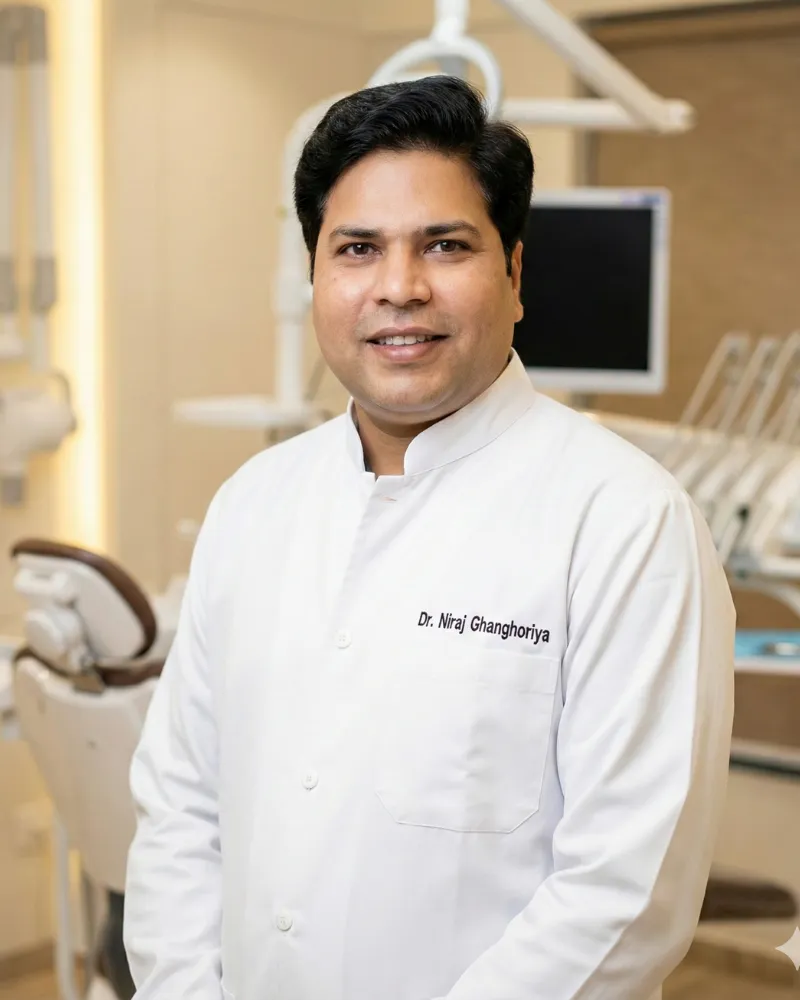
Authored By
Dr. Niraj Ghanghoriya
Dental Specialist

The Chewing Engine: Posterior Biomechanics & Anatomy
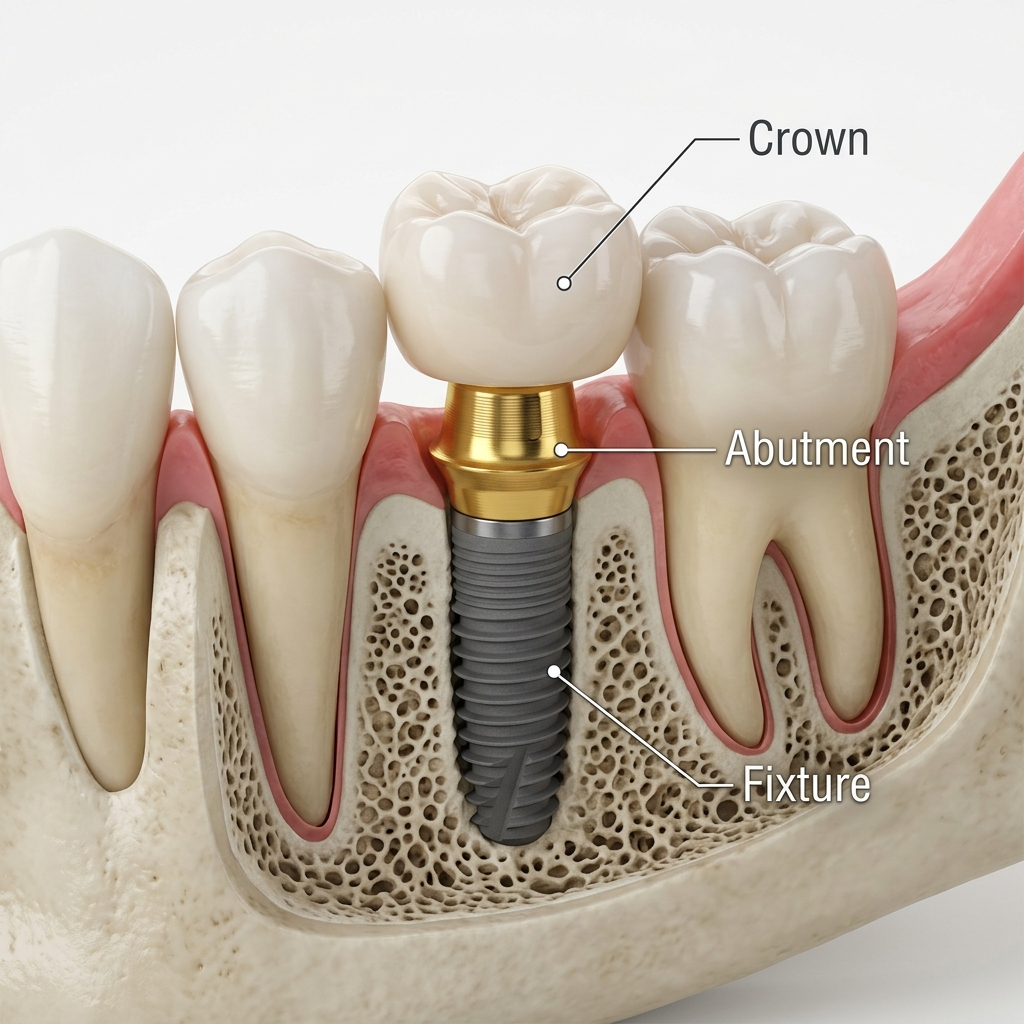
Clinical Diagram: Posterior Force Distribution
Anatomic Criticalities
- check_circle
Maxillary Sinus Proxy
Upper molars require careful assessment of the sinus floor depth.
- check_circle
Inferior Alveolar Nerve
Lower molars must maintain a 2mm safety buffer from the nerve canal.
- check_circle
Vertical Load Capacity
Molars generate crushing forces that exceed 200 lbs per square inch.
| Tooth Type | Avg Force (PSI) | Root Surface Area |
|---|---|---|
| Incisor (Front) | 35 - 50 | Small |
| Molar (Back) | 150 - 250 | X-Large |
Bone Density & The Hounsfield Scale
Success in molar implantation depends on **Primary Stability**, which is directly dictated by bone mineral density. Clinical success is optimized when bone density is above **350 Hounsfield Units (HU)**.
D1 (Dense)
> 1250 HU
Anterior Mandible
D2 (Porous)
850 - 1250 HU
Posterior Mandible
D3 (Fine)
350 - 850 HU
Anterior Maxilla
D4 (Soft)
150 - 350 HU
Posterior Maxilla
Journey of Restoration: Phased Clinical Protocol
Consult & CT Mapping
3D visualization of bone volume and nerve proximity.
Implant Placement
Surgical procedure to place the medical-grade titanium root.
Osseointegration
Biological bonding where living bone grows into the implant.
Final Restoration
Custom-milled crown placement optimized for your bite.
Financial Science: Economics of Posterior Care
The Fixture
$1,500+
Medical-grade root structure.
The Abutment
$500+
Restoration connector.
The Crown
$1,200+
High-strength surface.
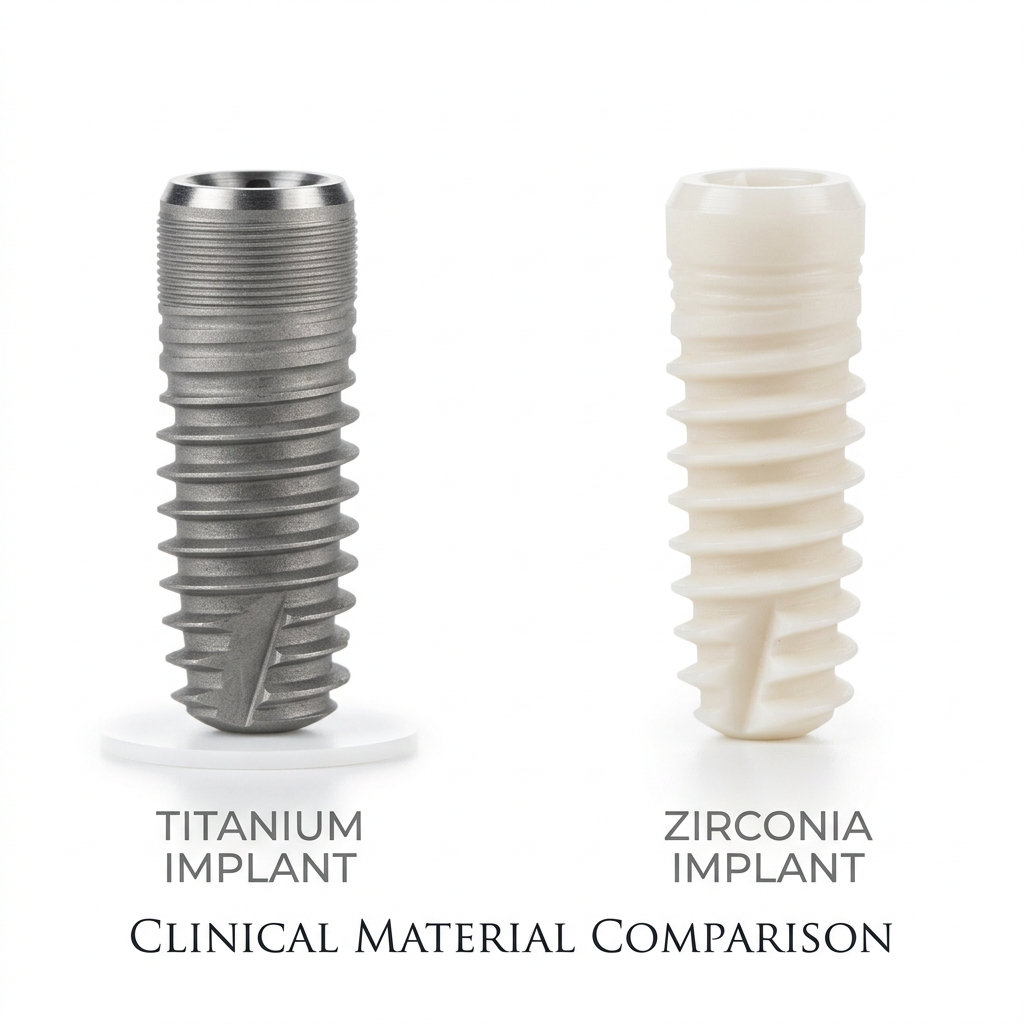
Clinical Material
Benchmarks
Titanium (Grade 5)
The gold standard for high-load molars due to its slight flexibility.
Zirconia (Ceramic)
100% metal-free, superior esthetics, and highly bio-inert.
Science of Healing: Critical Recovery Windows
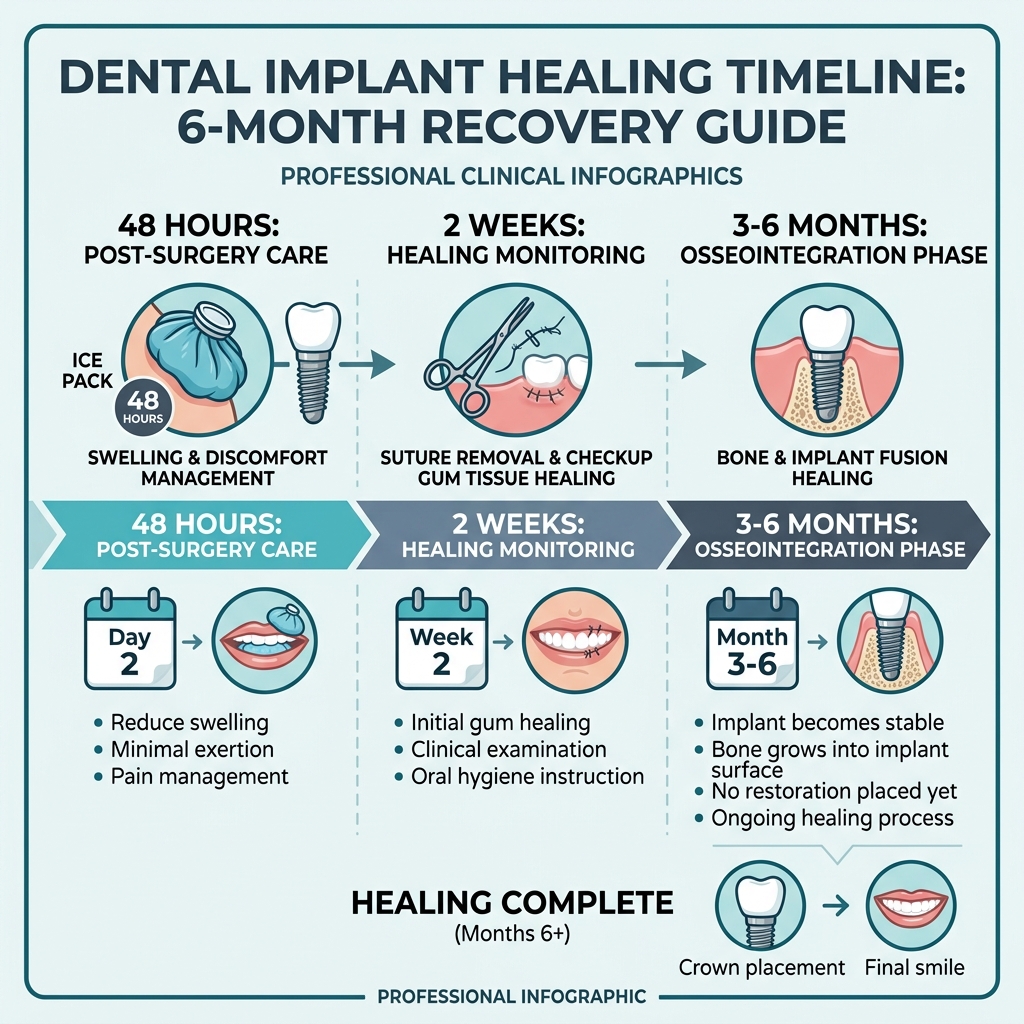
7-Day Protocol
Cold compress and zero physical exertion.
Warm salt water rinses (4x daily).
Transition to controlled soft diet.
Urgent Indicators
- • Fever or chills lasting over 6 hours
- • Persistent numbness after 12 hours
- • Continuous, throbbing pain
Prognosis: Success Rates & Biomechanics
97.4% 15-Year Success
Grade 5 Titanium in the posterior region maintains high stability even under heavy bruxism loads.
Primary Failure Mode
90% of failures are bacterial (Peri-implantitis) or occlusal overload (cracked crowns).
Common Inquiries
Q. Is a molar implant more painful than a front tooth?
No. The jawbone in the molar region is denser, providing high initial stability which leads to less post-op swelling.
Q. Can I chew immediately?
No. Bio-integration takes 3-4 months. Premature loading can cause failure.
Q. Is a sinus lift required?
Only if upper molar bone height is insufficient. We perform this routinely with high precision.
Q. How long until I get the crown?
Typically 4-6 months after the biological bonding phase.
Q. Does insurance cover it?
Most PPO plans cover 50-80% up to the annual limit.
Clinical Sign-off
"A molar implant is a structural investment in your future digestive health."
Dr. Niraj Ghanghoriya
Dental Specialist & Surgeon (MDS)
Molar Implant Knowledge Database
Core Protocols
Surgical Add-ons
Recovery Secrets
Diagnostic Intel