
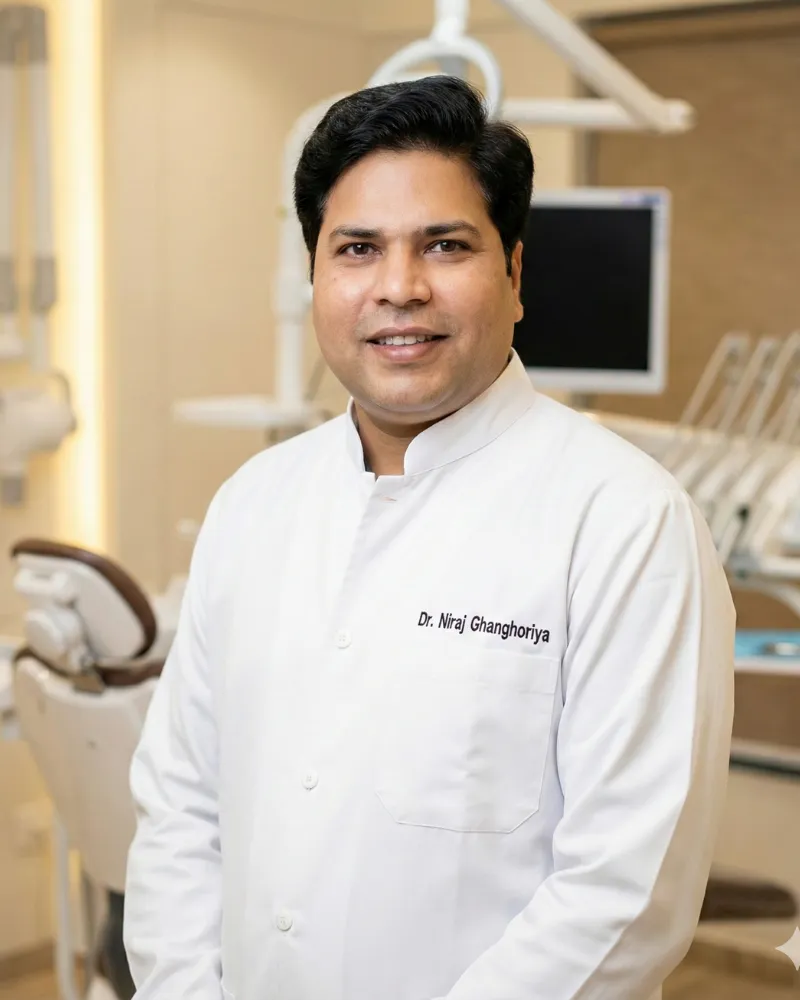
Replacing a lone missing tooth without damaging adjacent healthy structures.
title: "Single Tooth Dental Implants: Precision Esthetics" author: "Dr. Niraj Ghanghoriya" date: "April 10, 2026" heroImage: "/blog-placeholder-single-tooth.jpg"
Single Tooth Implants: The Best Way to Replace One Tooth
When you lose a single tooth, you have two main choices: a Traditional Dental Bridge or a Single Tooth Implant. While a bridge requires grinding down two healthy neighboring teeth, an implant stands alone—preserving your natural anatomy and oral health.
The Anatomy of a Single Restoration
A single-tooth replacement consists of three parts (detailed in our Parts Guide):
- The Post: The Endosteal Fixture that replaces the root.
- The Abutment: The connector that emerges from the gumline.
- The Crown: The visible Zirconia or Ceramic tooth.
Why Choose an Implant Over a Bridge?
- Preservation: No need to damage adjacent healthy teeth.
- Hygiene: You can floss an implant just like a natural tooth. (See our Cleaning Guide).
- Durability: A bridge typically lasts 10-15 years; an implant can last 25+ years.
- Bone Health: Maintains the bone height in the gap, preventing the gums from "dipping."
Typical Treatment Timeline
- Step 1: Extraction and Bone Grafting (if needed).
- Step 2: Implant Placement (Surgical).
- Step 3: Integration Period (3-4 Months).
- Step 4: Digital Scanning and Crown Attachment.
For many patients, we can offer "Immediate Load" (Same-Day) implants for front teeth, ensuring you never leave the office with a gap. Learn more about Immediate Load Options.
Does a Single Tooth Implant Hurt?
Most patients report that the Procedure is less uncomfortable than a standard tooth extraction. Using advanced guided surgery, we can place the fixture with a precision "keyhole" incision.
To compare costs between single and multiple units, visit our Financial Guide.
Cosmetic Tip: For front-tooth implants, we prioritize the "Emergence Profile"—the way the tooth grows out of the gum. We often use custom titanium or zirconia abutments to ensure a 100% natural look.