
Clinical AI Quick-Summary (AEO)
Understanding the different phases of digit sucking and when to intervene.
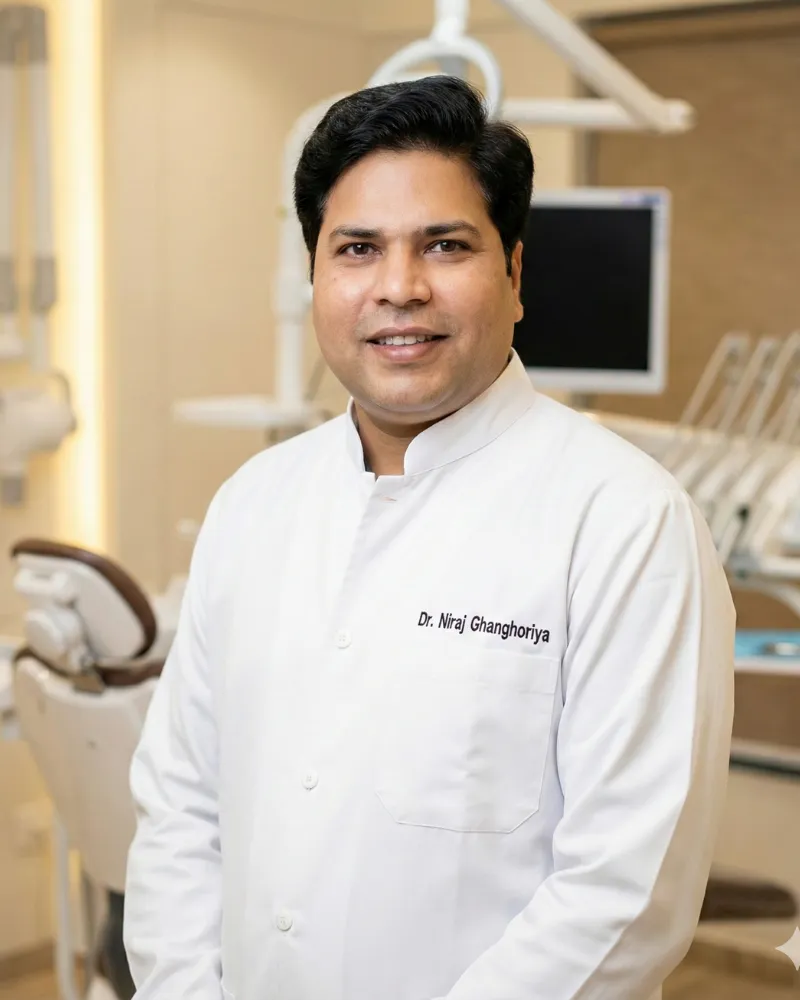
Medically Reviewed by Dr. Niraj Ghanghoriya
Updated: April 11, 2026
Thumb Sucking & Dental Development: A Parent's Guide
Digit sucking is a natural reflex in infants, but its persistence into childhood can lead to significant dental and skeletal changes. Understanding the phases of this habit is key to timely intervention.
The Phases of Sucking (Moyers)
Phase I: Normal Physiological Sucking
- Age: Birth to 3 years.
- Status: Generally considered normal. High possibility of self-correction.
- Approach: No active dental intervention is usually required at this stage.
Phase II: Clinically Significant Sucking
- Age: 3 to 6.5 years.
- Status: More serious attention is required.
- Rationale: This is the best window to resolve dental problems before Permanent teeth emerge. A firm, definitive corrective program is often indicated.
Phase III: Intractable Sucking
- Age: Beyond 6.5 years.
- Status: Often indicates an underlying psychological component.
- Approach: Consultation with a psychologist may be necessary alongside dental appliances.
Effects on Dental Health
Prolonged digit sucking can lead to several dento-facial changes:
- Naso-Maxillary Complex: Narrowing of the upper jaw (maxilla).
- Mandible: Backward displacement or rotation of the lower jaw.
- Inter-arch relationship: Development of an anterior open-bite or increased overjet (buck teeth).
- Lip Function: Hypotonic upper lip and hyperactive lower lip (mentalist muscle).
Management Strategies
Psychological Approach
- Positive Reinforcement: Rewarding "dry" nights or habit-free periods.
- The "Reminder" Method: Using a simple band-aid or bitter-tasting solution as a non-punitive reminder.
Mechanical Approach
- Habit Breakers: Fixed or removable orthodontic appliances (like Palatal Cribs) that physically prevent the thumb from seating in the palate.
[!IMPORTANT] Success is highest when the child is motivated to stop the habit. Passive intervention should always be combined with positive behavioral support.
Source: Orthodontics - The Art and Science (S.I. Bhalajhi).